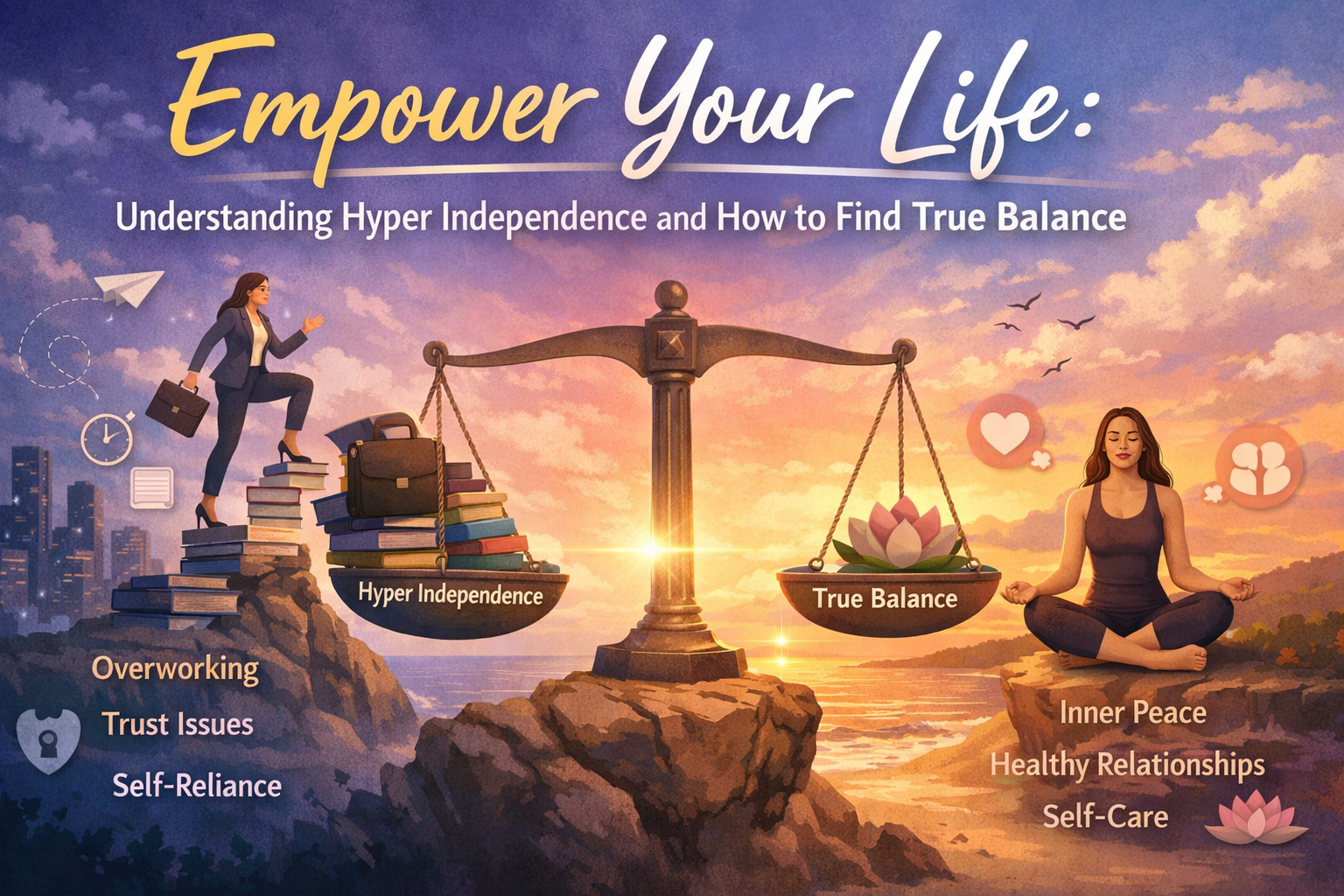
Hyper Independence
Mastering Your Strength: A Deep Dive into Understanding Hyper Independence
Have you ever felt like you absolutely had to do everything by yourself? Maybe you feel uneasy when someone offers to help you carry a heavy load or finish a project. This feeling is often more than just being a “go-getter.” It is something known as hyper independence. While being independent is usually a great thing, being hyper independent can feel like a heavy weight on your shoulders. It is the drive to never rely on anyone else, no matter how hard things get. This article will help you understand this feeling and show you how to find a healthier, happier balance in your life.
Understanding the hyper independence meaning is the first step toward a more relaxed and joyful life. Many people think it just means being a hard worker. However, it actually goes much deeper than that. It is often a protective wall we build around our hearts. When we understand why we build these walls, we can start to let the right people in. This guide is designed to be your friendly companion as we explore what it means to be truly strong while still being able to connect with others.
What is Hyper Independence and Why Does it Matter?
To start, we need to answer a simple question: what is hyper independence? In simple terms, it is the intense need to be self-reliant to an extreme degree. A person with this trait might refuse help even when they are overwhelmed or exhausted. They might feel that asking for a favor is a sign of weakness or a way to lose control. In the USA, we often praise people for being “self-made,” but being too independent can actually lead to burnout and loneliness. It is important to know that you don’t have to carry the world alone.
When we look at the hyper independence definition, we see it is different from healthy independence. Healthy independence means you can take care of yourself but you are also okay with teamwork. On the other hand, being hyper independent means you feel a “need” to do it alone to feel safe. It is like a shield you wear every day. By defining this clearly, we can see where our habits come from. Recognizing this pattern is a powerful move toward personal growth and better mental health for everyone involved.
Is Hyper Independence a Trauma Response?
Many experts have started to ask, is hyper independence a trauma response? The answer for many people is a firm yes. When someone goes through a hard time, especially as a child, they might learn that they cannot count on the adults around them. If the people who were supposed to help weren’t there, the brain decides, “I will just do everything myself so I never get let down again.” This is a survival skill. It kept you safe when things were unpredictable, and that is something to be proud of, but you might not need that shield anymore.
Seeing hyper independence as a trauma response helps us have more compassion for ourselves. It isn’t a personality flaw; it is a way your mind protected you. This is often called hyper independence trauma. If you had to grow up too fast or take care of your parents, your brain wired itself to be “the strong one.” Understanding this link to your past can be very healing. It allows you to say, “I am safe now, and I can start to trust people again,” which is a very brave thing to do.
Common Signs of Hyper Independence to Watch For
How do you know if you have this trait? There are several signs of hyper independence that show up in daily life. One major sign is having a hard time delegating tasks at work or home. You might think, “It’s just faster if I do it myself.” Another sign is feeling very uncomfortable when someone gives you a gift or a compliment. You might immediately feel like you owe them something in return. This “debt” feels heavy, so you avoid getting help altogether to keep things even and safe.
Other signs include being a “secret overachiever” who never complains. You might have a long list of things to do but never tell anyone you are stressed. If you find it hard to form deep relationships because you don’t want to “need” someone, that is a huge clue. Identifying these signs isn’t about judging yourself. It’s about shining a light on your habits so you can choose a better path. Once you see these patterns, you can start making small changes that lead to a much bigger sense of freedom.
Detailed Comparison: Healthy vs. Hyper Independence
| Feature | Healthy Independence | Hyper Independence |
|---|---|---|
| Asking for Help | Feels natural when a task is too big. | Feels like a failure or a sign of weakness. |
| Trust in Others | Believes people are generally helpful. | Expects people to let them down eventually. |
| Teamwork | Enjoys collaborating and sharing ideas. | Prefers to work alone to maintain control. |
| Emotional Reach | Shares feelings with trusted friends. | Keeps emotions hidden to stay “strong.” |
| Stress Levels | Managed through support and self-care. | Very high; feels like they must carry it all. |
| Root Cause | Confidence and self-assurance. | Often linked to past trauma or neglect. |
Exploring Hyper Independence in Women
In today’s fast-paced society, we often see hyper independence in women quite frequently. Women are often taught to be the “nurturers” while also being told they must “do it all” to be successful. This creates a double pressure. A woman might feel she has to be the perfect boss, the perfect mother, and the perfect friend without ever breaking a sweat. This can lead to a state of constant high alert. She may feel that if she stops for a second or asks for help, the whole house of cards will fall down.
This pressure often leads back to what causes hyper independence in the first place. For many women, it stems from a need to prove their worth in a world that hasn’t always been fair. They might feel they have to work twice as hard to get half the credit. However, true power comes from knowing when to lead and when to lean on a community. When women support each other and share the load, they actually become more effective and less exhausted. Breaking this cycle is a gift to yourself and the next generation.
Defining the Core: A Deep Look at the Definition
If we want to truly define hyper independence, we have to look at the psychological roots. It is a state where an individual’s self-reliance is so high that it interferes with their well-being. The hyper independence definition usually centers on a fear of vulnerability. To be vulnerable means to be seen, and to be seen means you could be hurt. For someone who has been hurt before, staying independent feels like staying in an armored tank. You are safe from the outside, but it gets very lonely and cramped inside that tank after a while.
By looking at this definition, we can see that it is actually a form of avoidance. We avoid the “risk” of trusting others. However, humans are social creatures by nature. We are designed to live in tribes and help one another. When we try to go against our nature by being “hyper” independent, our bodies and minds start to feel the strain. Redefining what it means to be strong—changing it from “doing it alone” to “having the courage to connect”—is a life-changing shift that opens up new worlds.
Understanding Hyper Independence Trauma Response
When we talk about a hyper independence trauma response, we are talking about how the nervous system reacts to stress. If you grew up in an environment where you had to be your own hero, your nervous system stayed in “fight or flight” mode. Being independent was your “fight” against a world that didn’t help you. Even when you grow up and move into a safe environment, your body might still think it’s in danger. It keeps you in a state of high self-reliance because it doesn’t know the “war” is over.
Learning to calm this hyper independence trauma involves teaching your body that it is okay to relax. It takes time and practice to tell your brain that not everyone will let you down. You can start with very small things, like letting someone else pick the restaurant for dinner or asking a coworker to check a document for you. Each time you let someone in and things go well, you are rewriting the story in your brain. You are moving from a place of fear to a place of confident connection.
What Causes Hyper Independence in Most People?
You might be wondering, what causes hyper independence in people who seem to have everything together? Often, it starts in childhood. If a child’s needs were ignored, or if they were praised only when they were “low maintenance,” they learn that being easy and independent is the only way to get love. Other times, it can be caused by a sudden betrayal in adulthood, like a difficult divorce or a business partner who stole from them. These events teach the brain that “others are dangerous” and “only I am safe.”
Cultural factors in the USA also play a big role. We are often told stories about the “lone wolf” who wins against all odds. While these stories are exciting, they don’t show the reality of how much better life is when you have a pack. Understanding these causes helps us stop blaming ourselves. We can see that our behavior was a logical reaction to our life experiences. Once we know the “why,” we can focus on the “how”—as in, how to build a life that includes both strength and support.
How to Move Toward Healthy Interdependence
The goal isn’t to become “dependent” on everyone for everything. The goal is interdependence. This is the beautiful middle ground where two or more people rely on each other. Think of it like a bridge. A bridge has two sides that support each other. If one side is missing, the bridge falls. Interdependence allows you to bring your strengths to the table while also accepting the strengths of others. This makes you more powerful, not less. It is the secret to successful businesses, happy marriages, and strong friendships.
To move toward this, start by practicing “micro-trust.” Trust someone with a small task first. Notice how it feels to have that task off your plate. You might feel a little anxious at first, and that is okay! Just breathe through it. As you get comfortable, you can share bigger parts of your life. You will find that life becomes much more “expansive” when you aren’t doing all the heavy lifting. You will have more energy for your passions and more room in your heart for the people who truly care about you.
About the Author