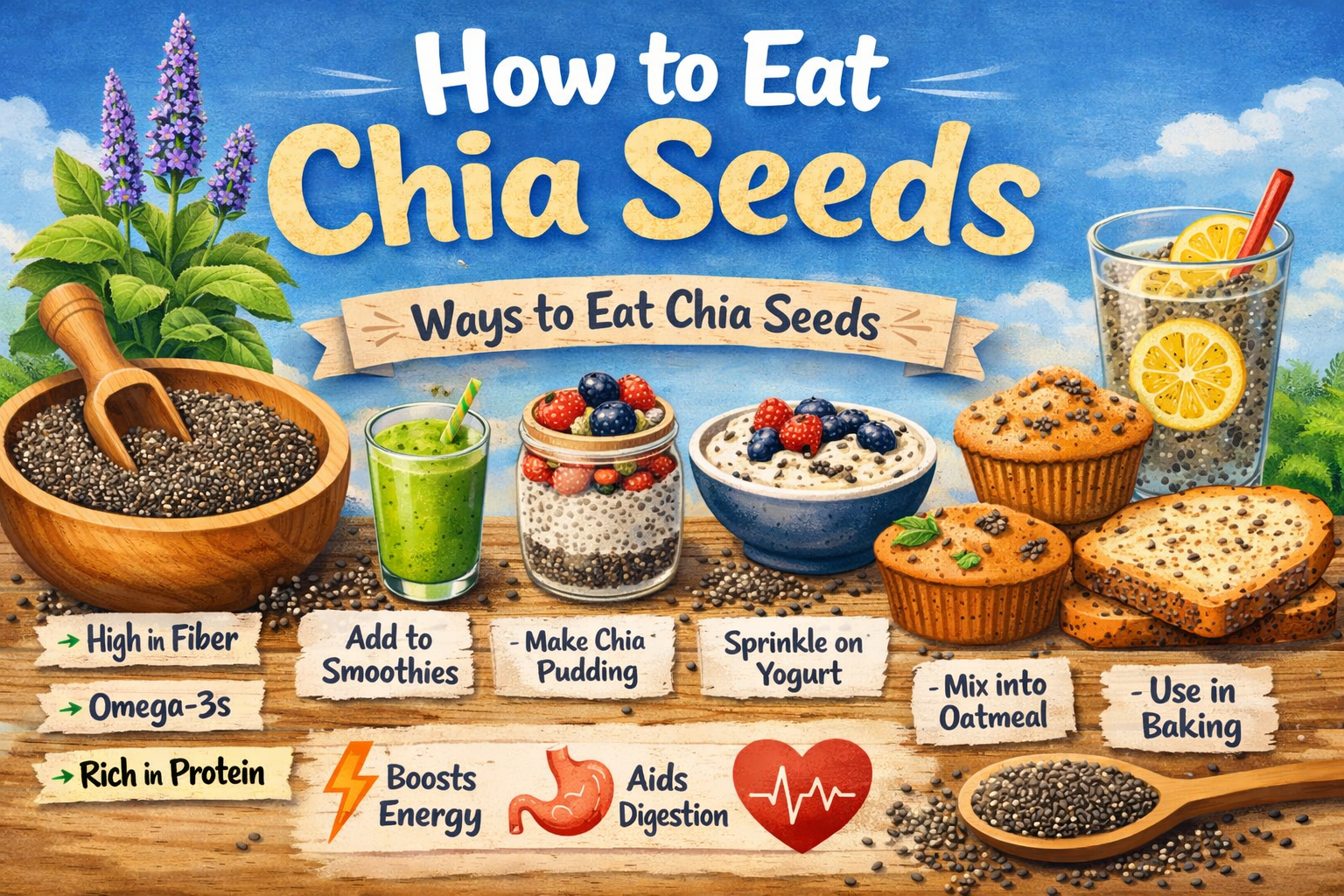
How to Eat Chia Seeds
How to Eat Chia Seeds in Easy, Tasty Ways
If you bought chia and feel confused, you’re in good company. Learning how to eat chia seeds is simple once you know one rule: chia loves liquid. It swells fast and turns soft, so it can thicken drinks, make pudding, and level up breakfast. The best part is the mild taste, so it fits sweet or savory food without a fight. I like to treat chia like a “tiny upgrade” instead of a huge diet change. Start small, watch how your body feels, and build a routine you can repeat. In this guide you’ll get safe serving sizes, easy ideas, and quick fixes for clumps and texture. You’ll also get clean tables that help you plan.
How to Eat Chia Seeds for the First Time
Your first week should feel easy, not intense. The smoothest start is to mix one teaspoon into something wet, then wait a few minutes. Try yogurt, oatmeal, or a smoothie, because these foods help the seeds soften. When friends ask me how to start, I say: begin tiny, stir well, and drink water through the day. If you jump to big amounts, your stomach can feel heavy. A gentle ramp works better. After three days, move to one tablespoon if you feel good. This is the simplest way to learn how to eat chia seeds without stress, and it makes the texture feel friendly instead of strange.
Best Daily Serving Size and Timing
Most people do well with one to two tablespoons per day, but the best amount is the one you can keep doing. If you are new, start with one teaspoon for a few days. Then move up slowly. Timing is flexible, but mornings are an easy win because chia pairs with breakfast. If you want a steady routine, pick one “home base” meal like oatmeal or yogurt. If you train or walk a lot, you might like chia in a smoothie before or after activity. When you learn how to eat chia seeds with a steady rhythm, it feels simple and natural, not like a strict plan.
Soak vs Dry: What Works Better
You can eat chia seeds dry, but soaking is usually smoother. Soaked chia turns gel-like, which makes it easier to swallow and more comfortable for many people. Dry chia can stick to the mouth and feel gritty, especially if you use too much. If you want the safest, easiest approach, soak it. Even ten minutes makes a difference. The only thing that matters is enough liquid and a good stir. If you are teaching a child, soaking is also the gentler choice. When someone asks how to eat chia seeds without texture surprises, soaking wins because it stays soft and blends into food better.
Chia Water with a Smooth Texture
Chia water is a clean way to add chia without cooking. Use one tablespoon of chia with a large glass of water, stir hard, wait ten minutes, then stir again. That second stir prevents clumps. If you want flavor, add a squeeze of lemon, a little honey, or a pinch of cinnamon. My favorite real-life use is on busy mornings when I don’t want a full breakfast yet. I sip it slowly and follow it with a normal meal later. This method keeps things simple and teaches how to eat chia seeds in a way that feels light, not heavy.
Creamy Chia Pudding for Breakfast or Dessert
Chia pudding is the easiest “make-ahead” option, and it tastes like a treat. Mix two tablespoons of chia with half a cup of milk, stir well, and chill it for at least two hours. Overnight gives the best texture. Add vanilla, cocoa, cinnamon, or mashed fruit for flavor. If it gets too thick, add a splash of milk and stir again. This is great for meal prep because you can make two or three jars at once. If you’re learning how to eat chia seeds and want something you’ll actually crave, pudding is a strong first pick.
Smoothies and Protein Shakes
Chia makes smoothies thicker and more filling without changing flavor much. Add one tablespoon to your blender with fruit, milk, and a protein source like yogurt or nut butter. Blend well, then let it sit for five minutes. It will thicken slightly as it rests. If you dislike the tiny seed texture, grind chia first or blend longer. A simple U.S.-style combo is banana, peanut butter, milk, and a little cinnamon. I also like chia after a long walk because it helps my snack feel complete. This is a practical way to learn how to eat chia seeds when time is tight.
Oatmeal, Yogurt, and Quick Add-Ins
This is the lowest-effort method because you just stir and eat. For oatmeal, add one to two teaspoons of chia after cooking, then wait a few minutes. It softens fast and makes oats feel richer. For yogurt, mix in chia and let it sit for ten minutes, or prep it the night before for a thicker bite. You can also add chia to cereal after you pour milk, then eat a little slower. These quick add-ins are perfect when you want results without learning recipes. If you’re wondering how to eat chia seeds every day without getting bored, this habit is easy to repeat.
Baking and the “Chia Egg” Trick
Chia fits baking because it holds moisture and blends into the mix. Add one or two tablespoons to pancakes, muffins, or quick breads for a tiny texture change and a stronger bite. You can also make a “chia egg” for egg-free recipes. Mix one tablespoon of ground chia with three tablespoons of water, wait ten minutes, then use it like one egg in many batters. The result can feel soft and tender. This method is helpful for families because it hides chia in familiar foods. If you want how to eat chia seeds ideas that work for kids, baking is a smart and friendly option.
Savory Meals: Soups, Salads, and Bowls
Chia is not only for sweet foods. Sprinkle one teaspoon over salads, rice bowls, roasted veggies, or soups. In soup, add it near the end and stir well so it doesn’t clump. In bowls, add it right before eating for a light crunch. You can even thicken a quick dressing by mixing chia into olive oil and lemon, then waiting five minutes. It turns slightly thicker and coats food better. This is great if you want fewer sweet snacks and more balanced meals. When people ask how to eat chia seeds without sugar, savory meals give a clean answer and still taste great.
Common Mistakes and Quick Fixes
The biggest mistake is using too much chia too fast. If you feel bloated, cut back for a few days and add more slowly. Another common issue is clumps. Fix that by stirring hard, waiting, and stirring again. If your pudding is too thick, add a splash of milk and stir until smooth. If your smoothie turns too gel-like, use less chia or drink it sooner. Also remember that chia loves water, so hydrate through the day. When you practice how to eat chia seeds with small adjustments, you get the benefits without the annoying texture surprises, and your routine feels easy to keep.
Chia Seeds Profile, Biography, and Movies
Tables make decisions simple, so you don’t have to guess. Below you’ll see a nutrition-style profile, a short “biography” about where chia comes from, and a movies-style table that lists popular media categories where chia is often discussed. The numbers in the profile are typical estimates and can vary by brand, so use them as a guide, not a strict rule. When you’re trying to master how to eat chia seeds, this is the kind of quick reference that helps you plan servings, pick recipes, and stay consistent without overthinking. Consistency beats perfection, and simple tools like these tables make consistency easier.
Profile Table
| Item | Typical Amount (2 Tbsp) | Why People Like It |
|---|---|---|
| Calories | About 130–150 | Small serving, strong nutrition |
| Fiber | About 9–11 g | Helps meals feel more filling |
| Protein | About 4–6 g | Works well in breakfast and shakes |
| Healthy fats | About 8–10 g | Includes plant omega-3 (ALA) |
| Minerals | Varies by brand | Often includes calcium and magnesium |
Biography Table
| Topic | Details | What It Means for You |
|---|---|---|
| Plant name | Chia comes from Salvia hispanica | A small seed with big soaking power |
| Origin | Historically used in parts of Mexico and Central America | Long tradition as a stored, easy food |
| Flavor | Mild and neutral | Works with sweet or savory meals |
| Texture | Forms a gel when soaked | Great for pudding, drinks, and thickening |
Movies Table
| Category | Where You Might See It | What They Usually Mention |
|---|---|---|
| Food documentaries | Superfoods-themed episodes | Simple recipes and nutrition talk |
| Cooking shows | Breakfast and meal-prep segments | Pudding, smoothies, and add-ins |
| Wellness series | Healthy habits and simple routines | Fiber, hydration, and easy daily use |
| Fitness content | Pre-workout and post-workout snacks | Shakes, oats, and quick fuel |
FAQs: how to eat chia seeds
Can I eat chia seeds without soaking?
You can, but keep it small and pair it with moisture. A teaspoon sprinkled into yogurt, oatmeal, or a smoothie works better than a dry spoonful. Chia expands when it touches liquid, so eating a big dry amount can feel uncomfortable. If you try it dry, chew well and drink water slowly. Most beginners prefer soaking because it turns soft and blends into food without surprise texture. If you want the smoothest path, start soaked for a week, then experiment. That approach feels calmer and helps you learn how to eat chia seeds without guessing or dealing with clumps.
How much chia should I start with?
Start with one teaspoon per day for three days. If you feel good, move to one tablespoon. Many people land at one to two tablespoons per day, but the best amount is the one your stomach likes. Chia brings a lot of fiber, and fiber is powerful, so a slow start matters. Also drink water through the day, because chia absorbs liquid. If you feel gassy or tight, pause for a day, then restart smaller. A steady ramp beats a fast jump. This keeps your routine comfortable and helps you stick with it long enough to see results.
What is the easiest chia recipe for busy mornings?
The easiest option is chia pudding or a smoothie. For pudding, mix chia with milk the night before, stir well, and chill. In the morning, add fruit or cinnamon and eat it cold. For a smoothie, blend chia with banana, milk, and yogurt, then let it sit five minutes so it thickens. Both options feel fast because you can prep or blend in minutes. If you want something even simpler, stir chia into yogurt and wait ten minutes. Busy mornings need habits that are easy to repeat, and these choices make that possible without extra cooking.
Why does chia clump, and how do I fix it?
Chia clumps when the outer layer touches liquid and seals together in a lump. The fix is simple: stir hard, wait a few minutes, then stir again. That second stir breaks the early gel pockets before they lock in. If you still see clumps, use a fork or a small whisk. Another easy trick is to mix chia into a thicker base first, like yogurt, then add milk after it is evenly mixed. If your pudding looks too thick later, add a splash of liquid and stir. Small steps keep texture smooth and make chia feel much more enjoyable.
Should I grind chia seeds or eat them whole?
Both work, and it depends on texture. Whole chia gives a light crunch and a gel-like bite when soaked. Ground chia blends into smoothies and baking more smoothly. If you dislike seeds in your teeth, grinding is a nice upgrade. Ground chia also makes a stronger “chia egg” for baking. If you grind at home, store it in a sealed jar and keep it cool, because ground seeds can lose freshness faster. For most people, whole chia is perfect for pudding, oats, and drinks, while ground chia shines in pancakes, muffins, and shakes.
What are the biggest safety tips with chia?
Go slow with the serving size and drink enough water. If you take a lot of fiber suddenly, your stomach can feel uncomfortable. So start small and build. Also avoid swallowing a large spoonful of dry chia, especially if you have trouble swallowing. Soaking is the smoothest and safest method for most people, and it prevents that “stuck” feeling. If you have medical conditions or take daily medications, keep your portions steady and talk to a qualified clinician before making large changes. Safe habits are simple habits, and simple habits are the ones you can keep long-term.
Your Simple Daily Chia Routine
The easiest plan is to pick one method and repeat it for seven days. Choose chia pudding if you like meal prep, smoothies if you want speed, or yogurt if you want zero effort. Keep your serving small at first, then build slowly until it feels comfortable. If you want a quick personal routine, try this: chia in yogurt on weekdays, chia pudding on weekends, and chia in baking when you want a fun treat. When you stay consistent, you don’t need perfection. You just need a routine you enjoy. That is the real secret behind how to eat chia seeds in a way that feels simple and sustainable.
About the Author