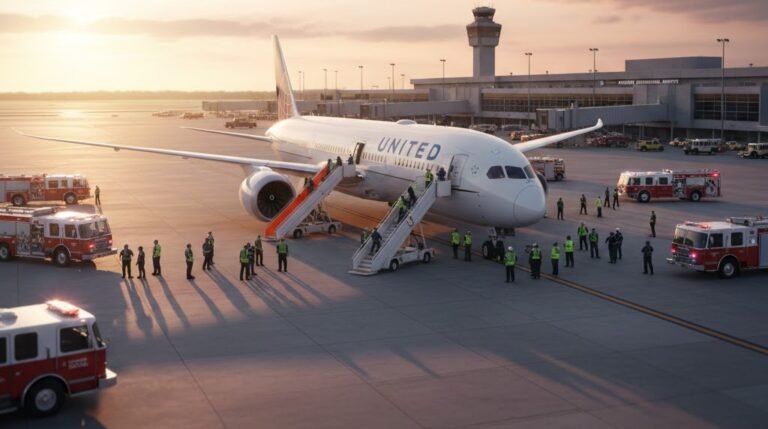
American Airlines Crash
Tragedy Over the Potomac: The Story of the American Airlines Crash and What It Means for Your Future Travels
On a cold winter evening, the unthinkable happened. An american airlines crash over the Potomac River shook the nation to its core. It was a moment that stopped air travel in its tracks and left families heartbroken. The event raised serious questions about safety in our skies.
This was not just another news story. It was a human tragedy that involved passengers, crew, and military personnel. In an instant, 67 lives were lost. The incident happened near Ronald Reagan Washington National Airport (DCA), a busy hub for american airlines flights.
The news spread fast. People wanted answers. How could this happen in one of the most controlled airspaces in the world? Families wanted to know what went wrong. Travelers worried about their own safety. The airline industry promised a full investigation.
In this article, we will break down everything you need to know. We will look at the timeline, the victims, the ongoing investigation, and how american airlines is responding. Our goal is to give you clear, honest facts. We also want to answer the questions you might have about flying today. Air travel remains very safe, but understanding such events is important for every passenger.
What Happened on That Night in January?
The date was January 29, 2025. The skies were clear near Washington, D.C. An American Airlines regional jet, Flight 5342, was making its final approach to Reagan National Airport. It was a routine landing after a flight from Wichita, Kansas.
On board were 60 passengers and 4 crew members. They were looking forward to getting home. At the same time, a U.S. Army Black Hawk helicopter was on a training flight in the same area. It had three soldiers on board. The two aircraft were sharing the crowded airspace near the Potomac River.
Then, tragedy struck. The jet and the helicopter collided in mid-air. Both aircraft crashed into the freezing Potomac River below. It was a catastrophic event. There were no survivors. The american airlines crash immediately became the deadliest air disaster in the United States in over 20 years.
Rescue crews rushed to the scene. But the impact was too severe. The nation watched in horror as the news unfolded. For the families waiting at the airport, it was a nightmare come true. The focus immediately shifted from arrival to recovery. This tragic event would now dominate headlines and spark a deep investigation into aviation safety protocols.
Honoring the Victims: The 67 Lives Lost
Behind every statistic is a human story. The american airlines crash claimed 67 unique lives. The victims included 60 passengers and 4 crew members on the jet. The three soldiers on the Black Hawk helicopter also perished. They were mothers, fathers, sons, daughters, and friends.
The passengers were a mix of people. Some were traveling for business. Others were returning from visiting family. There were young athletes and experienced pilots. The crew members were professionals who dedicated their lives to aviation. The soldiers were serving their country.
In the days that followed, the recovery operation was grim. Over 100 specialists worked at the crash site. Forensic teams, FBI agents, and pathologists came together. They worked tirelessly to recover every victim from the wreckage. It was a difficult and somber task.
The D.C. Chief Medical Examiner led the identification process. They used DNA analysis and other methods. Most victims were identified quickly, though the process for one victim took a little longer due to DNA verification needs. The city of Wichita, Kansas, felt the loss deeply. Many victims had ties to the community. A memorial grew at the local airport. People left flowers, notes, and shared tears. It was a small but powerful way to honor those who were gone too soon.
The Investigation: Radar Evidence and Altitude Questions
After any major american airlines crash, the focus turns to finding the cause. The National Transportation Safety Board (NTSB) leads this effort. They are the experts who piece together what happened. Their job is to find facts, not to place blame.
Early in the investigation, a key piece of radar evidence raised serious questions. Sources suggested the Black Hawk helicopter may have been flying too high. The helicopter was operating on a route that had a 200-foot altitude limit. However, early radar data indicated it might have been flying at 278 feet. This is a big difference.
NTSB Chair Jennifer Homendy confirmed this potential issue. She stated the helicopter was at 278 feet based on initial data. However, investigators are always careful. They continue to verify the accuracy of all data. Was the altitude reading correct? Was the helicopter crew aware of their height? These are critical questions.
The altitude issue is central to the crash. If the helicopter was above its allowed limit, it would have been in the path of the landing jet. This finding is not yet the official cause. But it is a major lead. The NTSB is also looking at the helicopter’s equipment. The pilot was doing a night vision goggles check. Investigators are trying to determine if the goggles affected the pilot’s view or if they were even being used at the critical moment. The investigation is painstaking and takes time.
Communication Breakdown: Missed Warnings Before the Crash
Air travel safety depends on clear communication. Pilots and Air Traffic Control (ATC) must talk to each other constantly. In the moments before this american airlines crash, communication may have failed.
The NTSB revealed a troubling timeline. Less than two minutes before the collision, Air Traffic Control warned the helicopter about the approaching jet. The helicopter crew acknowledged seeing the plane. But was the message fully understood?
Seconds before impact, the situation got worse. The jet’s own safety system, called TCAS, issued a traffic alert to the pilots. At almost the same time, ATC radioed the helicopter again. The controller told the helicopter to “pass behind” the CRJ-700 jet. It was a direct and clear instruction.
However, investigators believe the helicopter crew may not have heard this final, crucial command. There is evidence of a microphone transmission issue. The helicopter’s radio might have been blocked or busy. If the crew did not hear the instruction to pass behind, they would have continued on their path. The CRJ-700 crew tried to react. Data shows the jet increased its pitch just before impact in a desperate attempt to avoid the collision. But it was too late. This breakdown in the communication chain is a key focus of the probe.
The ADS-B Safety System: A Controversy Emerges
As the investigation deepened, a new controversy emerged. It involves a critical safety system called ADS-B. This technology broadcasts an aircraft’s exact location to ground stations and other planes. It is a standard safety feature on most civilian aircraft.
However, the U.S. Army has a different policy. They often do not use ADS-B on helicopter flights, including the one involved in the american airlines crash. The Black Hawk helicopter had the system, but it was not activated. The Army had received an exemption from the FAA in 2019.
This decision is now under fire. Lawmakers, including Senators Ted Cruz and Maria Cantwell, demanded answers. They requested a 2024 Army report explaining why it avoids using this life-saving technology. The Army initially refused to release the report, calling it a “deliberative process” document. The senators called this refusal “completely unacceptable.”
The lack of ADS-B data makes investigations harder. It also removes a layer of safety. If the helicopter had been broadcasting its position, the jet’s systems and ATC might have had an even clearer picture. Since the crash, the FAA has acted. They have mandated that helicopters must use ADS-B near Reagan National Airport, except for critical national security missions. This change is a direct result of the tragedy. It shows how one american airlines crash can lead to new rules that make flying safer for everyone.
American Airlines CEO Responds to the Crisis
When a tragedy like this happens, leadership matters. Robert Isom, the CEO of american airlines, had to guide his company and comfort the public. His response was closely watched by the nation.
Mr. Isom released a statement expressing deep sorrow. He offered condolences to the families of the passengers and crew. He also thanked the first responders who worked in dangerous conditions on the Potomac River. His tone was one of grief and determination.
Beyond the words, the CEO had to take action. American airlines had to cooperate fully with the NTSB. They provided all flight records, crew history, and maintenance logs. The airline also had the difficult task of supporting the victims’ families. They set up support hotlines and offered counseling.
The crash also affected american airlines stock. In the days following the event, the stock price saw some turbulence. Investors are sensitive to major incidents. They worry about potential lawsuits, higher insurance costs, and damage to the brand’s reputation. However, history shows that airline stocks often recover after such events, especially if the airline is not found at fault. The CEO’s job was to reassure the public, support his employees, and maintain confidence in the airline’s safety culture.
The Fallout: Arrests at Reagan National Airport
In the chaotic days after the crash, a strange and serious side event occurred. It involved two employees at Ronald Reagan Washington National Airport. Their actions complicated the recovery and investigation.
Two men, Mohamed Lamine Mbengue (21) and Jonathan Savoy (45), were arrested. They worked at the airport. The charge against them was computer trespass. What did they do? They allegedly leaked sensitive airport security footage.
The footage they leaked showed the exact moment of the american airlines crash. It was graphic and disturbing. The men provided this video to media outlets, who then published it. This caused immediate distress to the victims’ families. It also raised concerns about airport security protocols.
The Metropolitan Washington Airports Authority (MWAA) was furious. They considered the leak a serious breach. The footage was part of an active investigation. Releasing it publicly was not only insensitive but potentially illegal. The arrests showed that even in a time of national mourning, some people make terrible decisions. It also highlighted the need for stricter controls over sensitive investigation material. For the public, it was another sad chapter in a story already full of pain.
Remembering the Victims: Memorials in Wichita and D.C.
Communities need time to grieve. In the weeks following the american airlines crash, two cities came together to remember. Wichita, Kansas, and Washington, D.C., both felt the impact deeply. They created spaces for collective mourning.
At Dwight D. Eisenhower National Airport in Wichita, a beautiful memorial grew organically. It started with just two small tables. Travelers and locals began leaving flowers, handwritten notes, and personal messages. Over time, the tribute expanded to nine tables. It became a sea of color and emotion.
People stopped to read the notes. Some cried. Others simply stood in silence. Sister Mary Catherine Clark, a traveler passing through, visited on purpose. She remembered a previous tragedy when an American Airlines flight brought home the bodies of four victims. For her, paying respects was important.
The airport plans to preserve these memories. They will take down the physical display, but they will digitize every note. The plan is to create a framed collage to display permanently. A community committee will also meet to discuss a long-term, official tribute. In Washington, D.C., a separate memorial grew near the Potomac River, overlooking the crash site. These acts of remembrance help a wounded community begin to heal.
What This Means for Your Future American Airlines Flights
If you have upcoming american airlines flights, you might feel nervous. This is completely normal. A tragedy like this makes everyone think about safety. However, it is important to keep things in perspective.
Air travel remains the safest form of long-distance transportation. Incidents like the american airlines crash are incredibly rare. In fact, this was the first fatal crash involving a U.S. commercial airline in years. When such an event does happen, the entire industry learns from it.
The investigation into this crash will lead to changes. We are already seeing them. The FAA is now requiring ADS-B use for helicopters near Reagan National. Communication protocols between military and civilian air traffic will likely be reviewed. Training for night flights might be updated. These changes are designed to prevent a similar accident from ever happening again.
So, when you book your next flight, know that you are benefiting from this intense scrutiny. The systems are being checked. The people are being retrained. The rules are being tightened. Your safety is the top priority for american airlines and every other carrier. You can also do your part by listening to the crew and paying attention to safety briefings. But you can book your ticket with confidence, knowing you are stepping onto a machine and into a system built on decades of learning and improvement.
Navigating American Airlines Services After the Crash
In the wake of such a significant event, you might need to interact with the airline for various reasons. Perhaps you need to check a flight, understand baggage rules, or simply have a question. Knowing how to navigate these services is helpful.
If you are traveling soon, checking your american airlines flight status is always a smart move. You can do this easily on their website or app. Simply enter your flight number. This will give you real-time updates on departure and arrival times. It is the best way to stay informed, especially if there are any schedule adjustments.
Maybe you are planning a trip and need to know the luggage rules. The american airlines carry on size is a common question. Their policy is standard for most U.S. airlines. Your carry-on bag must fit in the overhead bin. The maximum dimensions are 22 x 14 x 9 inches. You are also allowed one personal item, like a purse or laptop bag, that fits under the seat in front of you. Sticking to these sizes helps the boarding process go smoothly for everyone.
If you have a problem or a question, you might need to contact american airlines customer service. They have several ways to help. You can call their reservation lines. You can also use the chat function on their website or app. Social media is another good option. Their customer service team on X (formerly Twitter) is often very responsive. Be patient, as wait times can be long during busy periods. Having your confirmation number ready will speed things up.
The Broader Impact on American Airlines and the Industry
This crash will have a lasting effect, not just on the families, but on american airlines and the entire aviation industry. It serves as a harsh reminder that constant vigilance is required. The industry has a remarkable safety record, but it is built on learning from past mistakes.
For american airlines, there is the immediate task of healing. Employees are grieving lost colleagues. Pilots and flight attendants may feel a new sense of vulnerability. The airline must support its team. They also must work to maintain public trust. Passengers need to feel confident when they step on board.
Financially, there are costs. These include legal settlements, increased insurance premiums, and potential fines. However, american airlines is a strong company. It has weathered many storms in its long history. The airline has faced previous american airlines bankruptcies and economic downturns. It emerged from those challenges leaner and more focused. This crisis is different, but the airline’s resilience will be tested again.
The industry as a whole is watching the NTSB investigation closely. Every finding will be studied. New safety mandates will likely come from the FAA. Other airlines will review their own training and protocols. Military and civilian airspace coordination will be examined. The goal is simple: ensure this never happens again. This process of investigation and improvement is what makes flying so safe over the long term. While the pain of this american airlines crash will never fully disappear, the lessons learned will protect millions of future passengers.
Frequently Asked Questions About the American Airlines Crash
Here are answers to some common questions people have about this tragic event and air travel in general.
1. What exactly caused the American Airlines crash in Washington, D.C.?
The official cause is still under investigation by the NTSB. However, key factors being looked at include the helicopter potentially flying at an unauthorized altitude (around 278 feet versus a 200-foot limit) and possible communication failures between Air Traffic Control and the helicopter crew just before the collision.
2. How can I check the status of my upcoming American Airlines flight?
You can easily check your american airlines flight status on the official American Airlines website or mobile app. Just enter your flight number or route and date to see real-time departure and arrival information, gate details, and any delays.
3. What is the carry-on size policy for American Airlines?
The american airlines carry on size limit is 22 x 14 x 9 inches. This bag must fit in the overhead bin. You are also allowed one personal item, such as a purse or small backpack, which must fit under the seat in front of you.
4. How do I contact American Airlines customer service for help?
You can reach american airlines customer service by phone, through live chat on their website, or via their social media accounts on platforms like X (Twitter). Having your booking confirmation number ready will help them assist you faster.
5. Has American Airlines ever filed for bankruptcy before?
Yes, american airlines and its parent companies have gone through american airlines bankruptcies in the past, most notably in 2011. The company used the process to reorganize its finances and emerged as a stronger, more competitive airline.
6. How did the crash affect American Airlines stock?
Following the news of the crash, american airlines stock experienced some initial volatility and a slight dip, which is common after major incidents due to investor concerns about potential costs and brand reputation. However, airline stocks often stabilize over time as the investigation progresses and the focus returns to operations.
Conclusion: Learning from Tragedy to Ensure Safer Skies
The american airlines crash over the Potomac River is a scar on the nation’s memory. It was a day of profound loss. Sixty-seven people went to work or boarded a plane, not knowing it was their last day. We honor them by seeking the truth and demanding safer skies.
The investigation is not just about finding fault. It is about understanding every detail. It is about looking at radar evidence and analyzing cockpit voice recorders. It is about questioning old policies, like the military exemption for safety systems. Every finding will lead to a new rule, a new training module, or a new piece of technology. This is the cycle of safety.
For you, the traveler, this diligence should bring peace of mind. When you book your next ticket, you are part of the safest transportation system in the world. The systems that failed that night are being fixed. The questions being asked by investigators will lead to answers that protect you.
We must never forget the victims or their families. Their loss is permanent. But from this tragedy, we can build a future where such an event is even less likely. Fly safely, stay informed, and always appreciate the skilled professionals who work every day to get you home. If you have questions about your travel rights or need assistance, reaching out to american airlines customer service is a good first step. Let us move forward with respect for the past and confidence in the future of flight.
You may also like to read About Magali brunelle
About the Author